Invictus Supply Co.
Antimony Trisulfide Sb₂S₃
Couldn't load pickup availability
Premium Antimony Trisulfide (Sb₂S₃) – High-Purity Powder for Demanding Applications
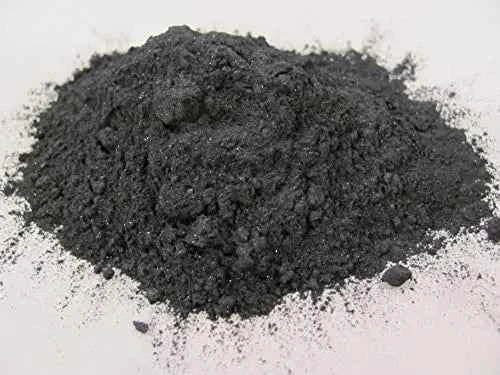
Unlock the power of a versatile inorganic compound with antimony trisulfide, a gray-black crystalline or amorphous powder prized for its unique combustion, lubrication, and optical properties. Also known as stibnite in its natural mineral form, this essential material delivers reliable performance across pyrotechnics, automotive, glassmaking, and advanced manufacturing.
Whether you're crafting breathtaking fireworks displays, engineering high-performance brake systems, or producing vibrant specialty glass, antimony trisulfide provides the ignition sensitivity, friction stability, and color-enhancing qualities that professionals demand.
Key Features & Benefits
- Excellent ignition and combustion aid — Low melting point (~550°C) and easy ignitability make it ideal as a "tinder" in pyrotechnic compositions.
- Superior friction modification — Acts as a solid lubricant that stabilizes the coefficient of friction, reduces wear, minimizes noise, and enhances high-temperature stability in brake linings and clutch materials.
- Vibrant pigment properties — Historically used for vermilion/orange hues and still valued in ruby-colored glass, paints, and specialized coatings.
- Flame retardant synergy — Contributes to fire-resistant formulations in plastics, textiles, and rubber.
- Military & industrial reliability — Serves as a critical primer in ammunition, explosives, smoke markers, and tracer bullets.
Wide Range of Uses
Antimony trisulfide shines in numerous high-value applications:
- Pyrotechnics & Fireworks: Enhances white star compositions, glitter effects, fountains, flash powders, and Bengal lights. It creates shimmering, reflective particles during combustion for spectacular visual and auditory displays.
- Automotive & Friction Materials: A top-choice additive in brake pads and shoes (typically at a few percent loading). It improves braking consistency, wear resistance, and heat management while reducing squeal and extending component life.
- Matches & Safety Devices: Essential in strike-anywhere match heads and certain safety match formulations.
- Explosives & Defense: Functions as a primer, combustion regulator, or sensitizer in military ammunition, detonators, smoke signals, and pyrotechnic munitions.
- Glass & Ceramics: Produces beautiful ruby-red or colored glass; also used in enamels and pigments.
- Rubber & Plastics: Acts as a vulcanizing agent and contributes to flame-retardant properties.
- Pigments & Coatings: Provides durable yellow, orange, or vermilion tones in paints, camouflage formulations, and historical art applications.
- Emerging & Specialty Uses: Photoconductor in older vidicon tubes, component in thermoelectric materials, optoelectronic devices, and potential anode materials for batteries.
This multi-talented compound bridges traditional craftsmanship (fireworks and pigments) with modern engineering (brakes and flame retardancy), making it indispensable for manufacturers seeking consistent, high-performance results.
Note on Safety: Antimony trisulfide is a hazardous material. It is toxic if swallowed or inhaled, suspected of causing cancer with prolonged exposure, and may damage organs through repeated contact. It can form combustible dust clouds and release toxic fumes (including hydrogen sulfide) when exposed to acids or high heat. Always handle with appropriate PPE, in a well-ventilated area, and follow all local regulations for storage, transport, and disposal.
Share